Lion Coloring Pages

Meet a friendly lion with a big, fluffy mane and a tail with a tuft at the end. This page gives you the same lion at three levels: very thick lines and big shapes for ages 3 to 5, a grassy scene with a sun and a tree for ages 6 to 8, and a detailed savanna picture with a layered mane for ages 9 to 12. Print the A4 or US Letter PDF, or color the lion on screen first.

Choose a level and printColor onlineHow to Draw a Lion

Choose a level and print

The same drawing in three levels. Print it from the page or download a PDF.

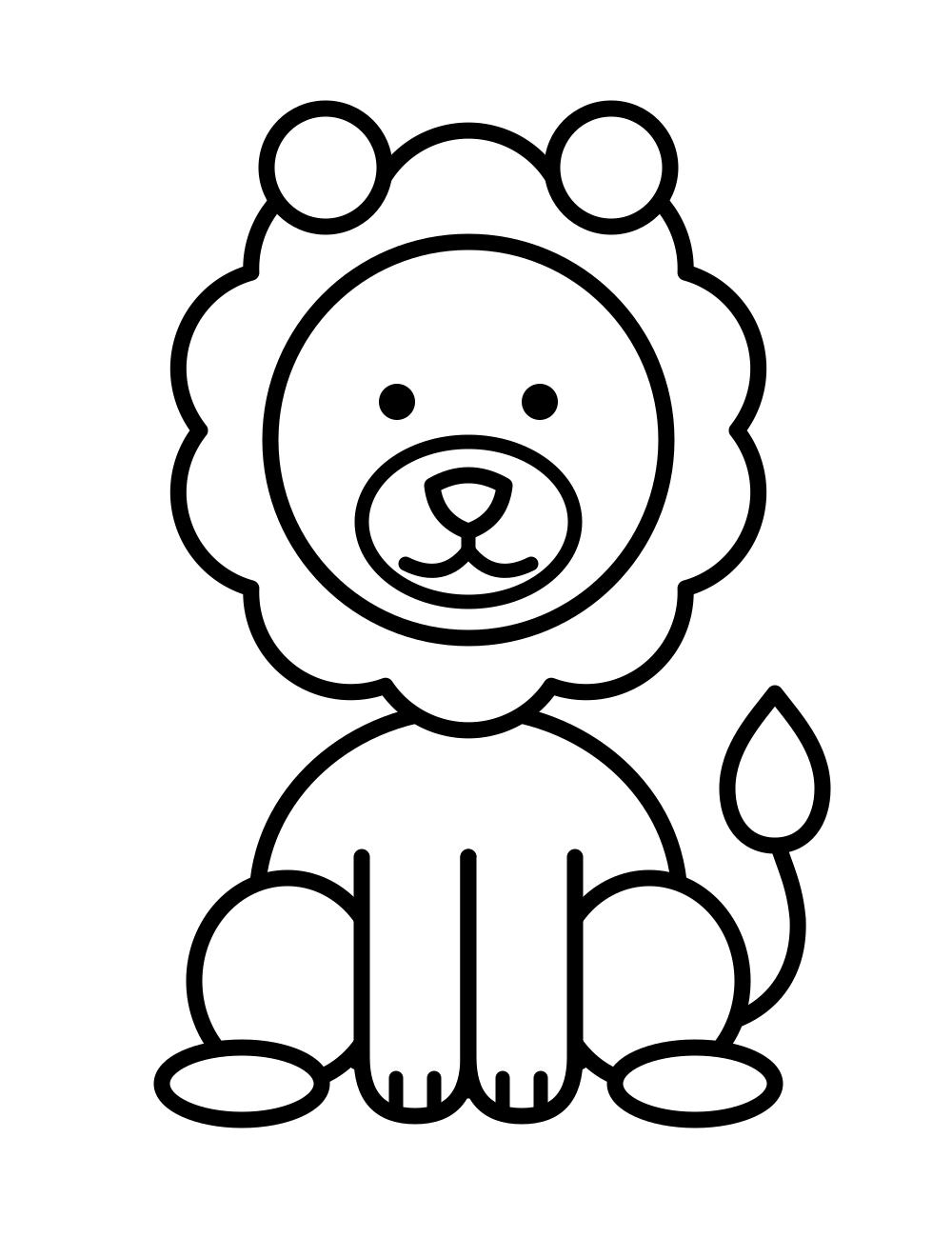
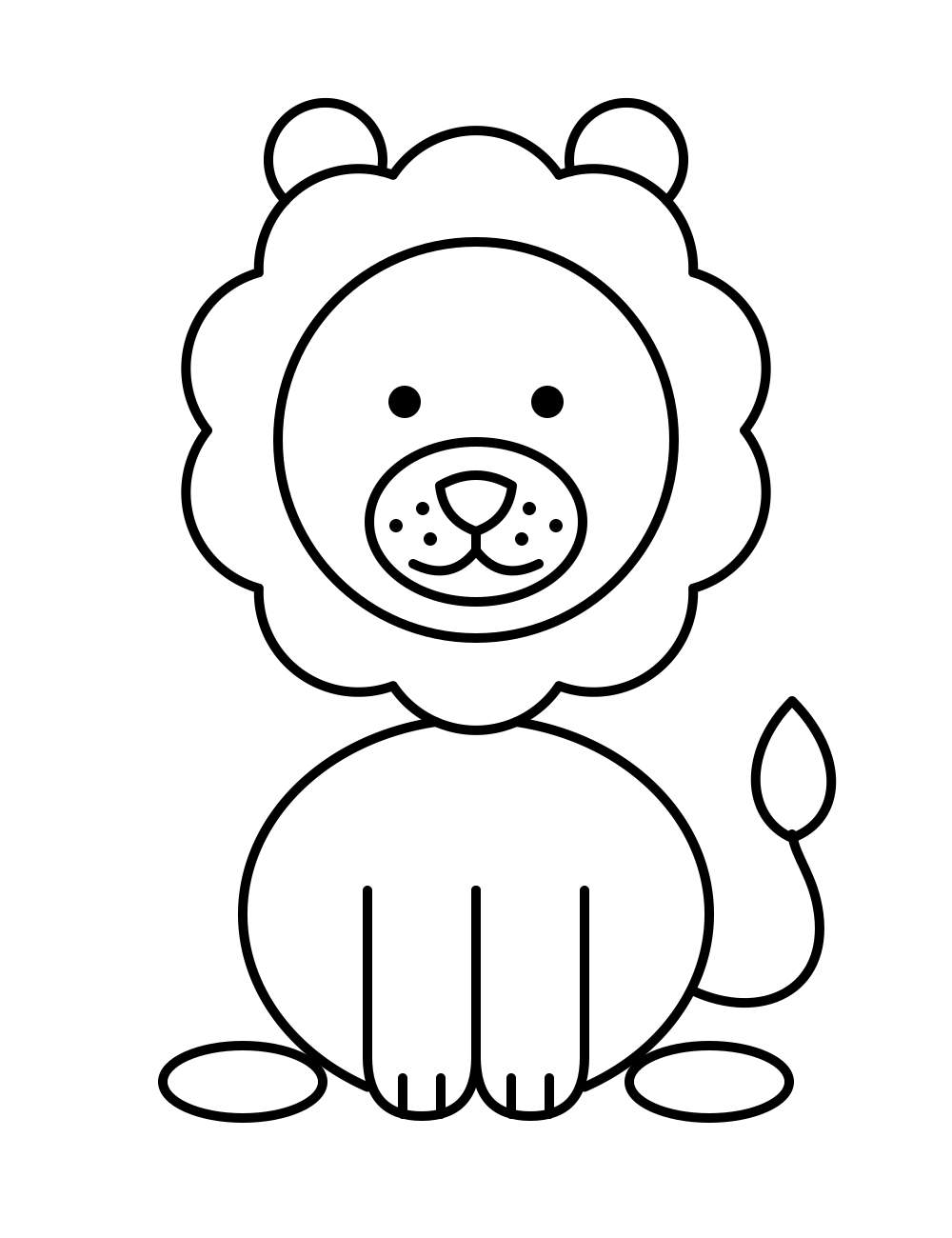
Thick-line drawing of a friendly sitting lion with a round scalloped mane, two round ears, a smiling face, a curled tail with a tuft and large areas to color.

Little

Ages 3–5

Very thick lines and a few big areas. Easy for small hands.
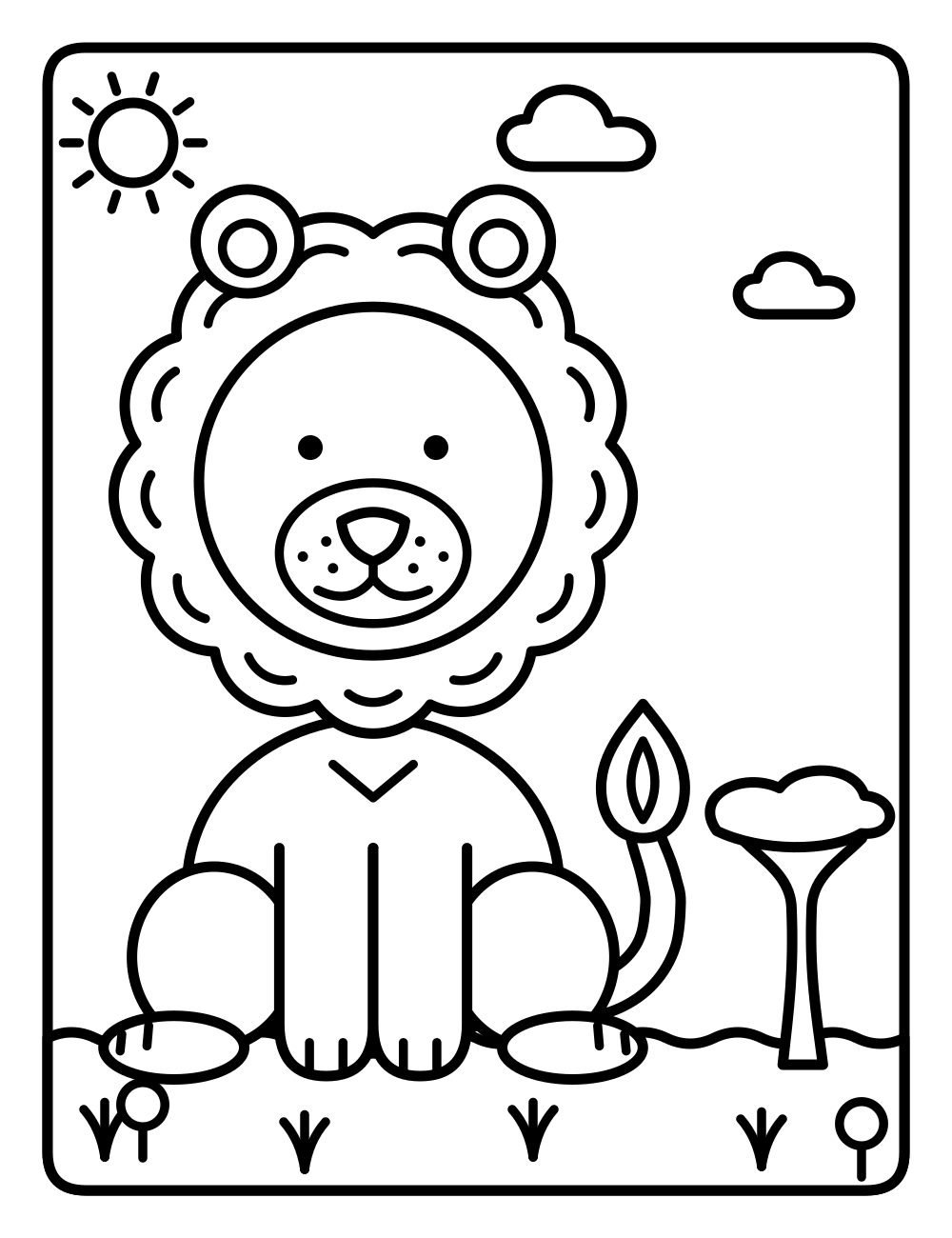
Friendly sitting lion with a curly scalloped mane on a grassy hill, with a sun, two clouds, an acacia tree and a flower, drawn in thick lines for easy coloring.

Kids

Ages 6–8

Thick lines and a simple background to color.
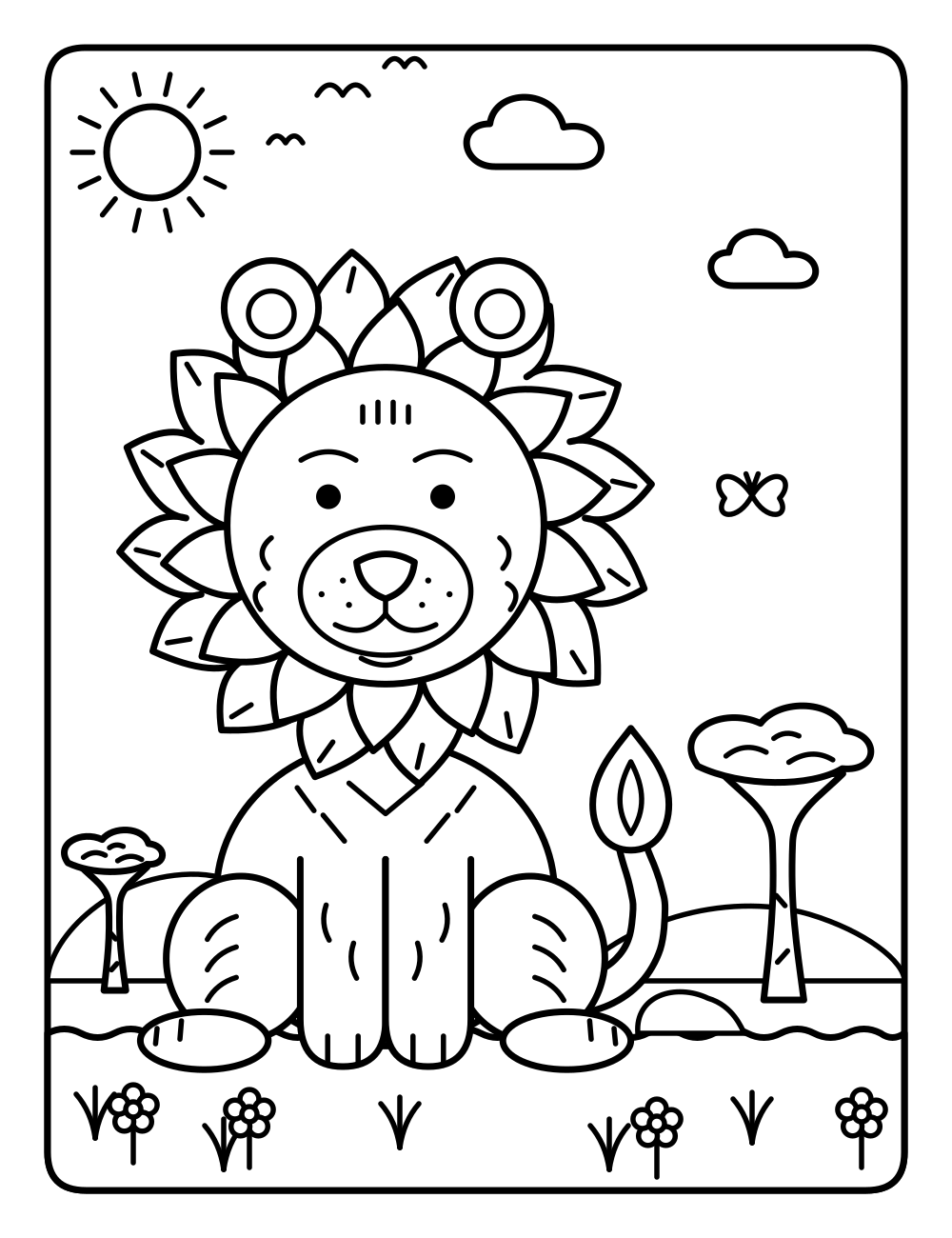
Detailed lion with a layered, leaf-shaped mane, fur lines and a whiskered face, sitting in a savanna scene with two acacia trees, hills, birds, a butterfly and flowers.

Detailed

Ages 9–12

Finer lines, more areas and patterns for older children.

Color online

Choose a color, then tap an area of the picture to fill it. When you are happy, save it as an image or print it.

Coloring online needs JavaScript. You can still print the pages above.

Real colors to try

These are the natural colors of this animal. Use them, or pick your own.

  • Sandy gold
  • Cream
  • Mane brown
  • Dark brown
  • Soft pink
  • Grass green
  • Sky blue
  • Sun yellow

Lion facts for kids

  • Lions live in family groups called prides, with several lionesses, their cubs and one or more adult males.
  • Only adult male lions grow a mane. Female lions, called lionesses, do not.
  • A lion's roar is so loud that it can be heard from several kilometers away.
  • Most wild lions live in Africa, on grassy plains called savannas.
  • Lion cubs are born with faint spots that fade as they grow up.

How to use this coloring page

  • Ages 3 to 5: start with the first picture. The thick lines make it easier to stay inside, and big crayons or chunky markers work well.
  • Ages 6 to 8: the second picture adds grass, a sun and a tree, which makes it a good page for practicing sky, grass and fur colors.
  • Ages 9 to 12: the third picture has lots of small areas. Colored pencils or fine felt-tip pens work best, and a little shading makes the mane look layered.
  • Printing: choose A4 or Letter, print at 100% (actual size) and use slightly thicker paper, around 120 gsm (32 lb), if you plan to use markers or watercolor.
  • At home or in class: print a few copies of each level, so some children can color the lion while others practice drawing it with the lesson.

Pip's idea

Color the mane like a sunset, with oranges, pinks and purples blending into each other, and give the lion a night sky with stars behind it.
Questions and answers

Do all lions have a mane?
No. Only adult male lions grow a mane. Females, called lionesses, do not have one. This coloring page shows a lion with a mane, so it is a good way to talk about the difference.
Which lion page should I print first?
Choose by age and patience. The first page has thick lines and big areas, the second adds a grassy scene, and the third has lots of small areas that suit colored pencils and steady hands.