Elephant Coloring Pages

This happy elephant has its trunk raised in a friendly hello. You get the same elephant at three levels: thick lines and big shapes for ages 3 to 5, a grassy scene with a sun, clouds and a little tree for ages 6 to 8, and a detailed picture with trunk wrinkles, toenails and a fuller savanna for ages 9 to 12. Print the A4 or US Letter PDF, or try the page on screen first.

Choose a level and printColor onlineHow to Draw an Elephant

Choose a level and print

The same drawing in three levels. Print it from the page or download a PDF.

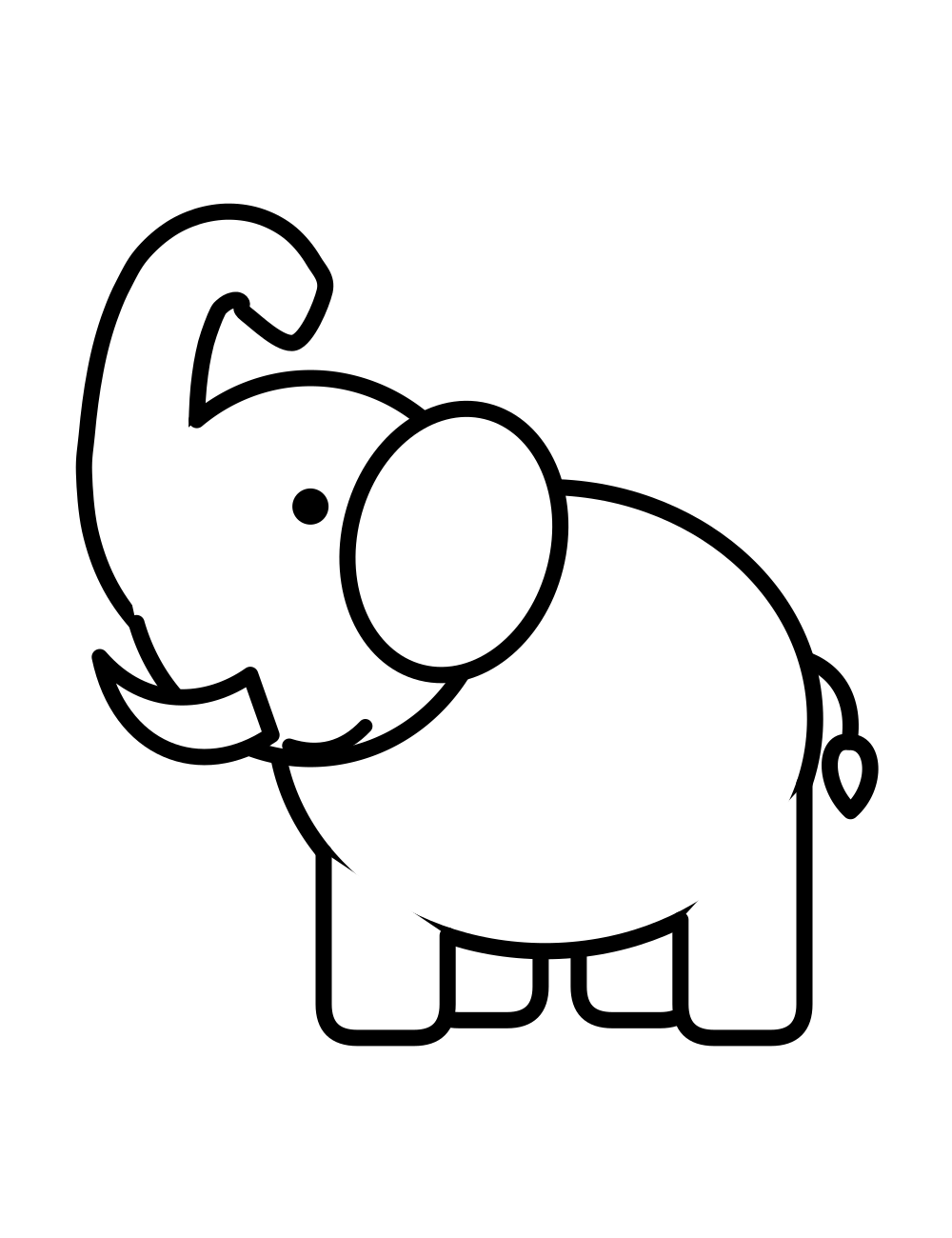
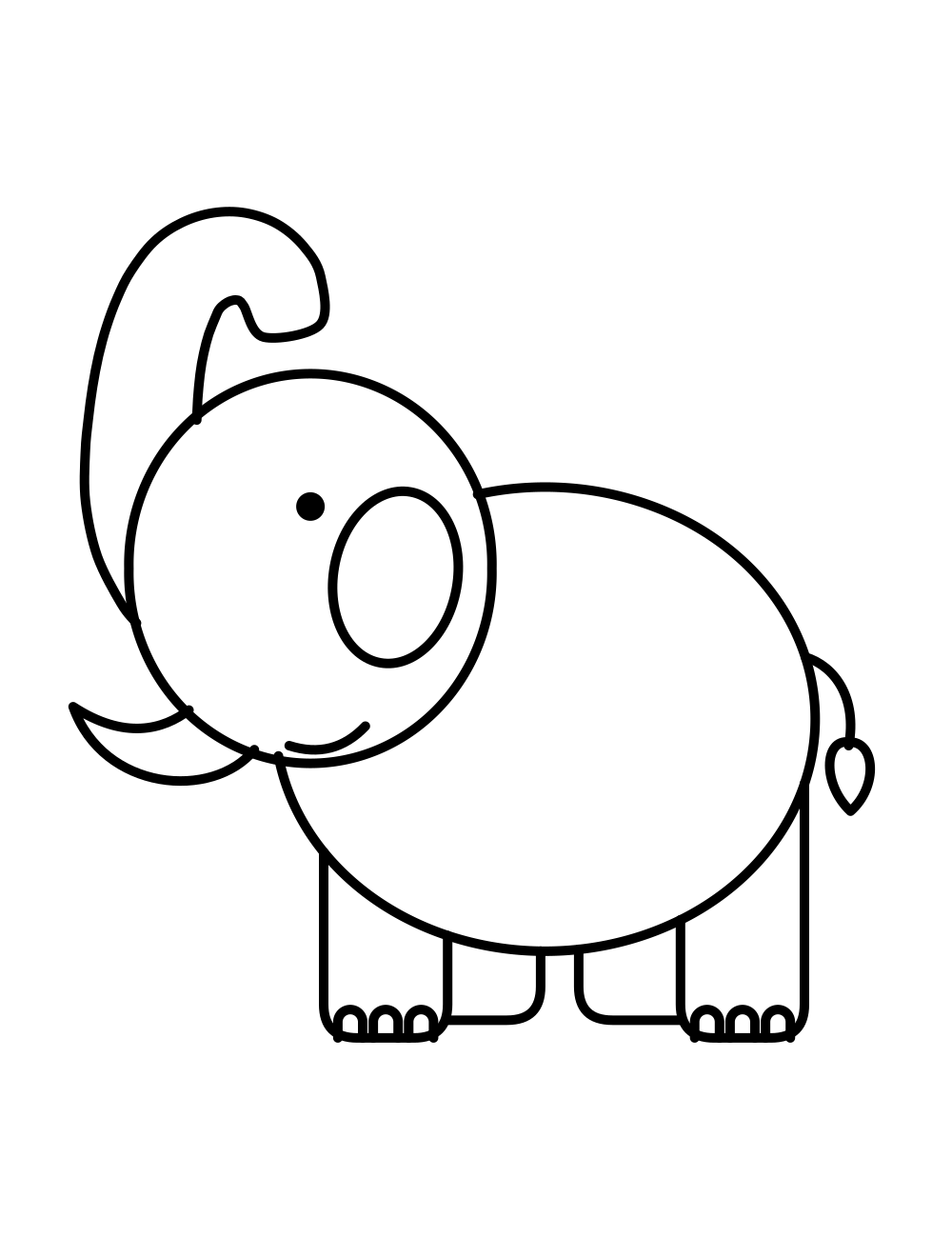
Thick-line drawing of a smiling elephant seen from the side, with its trunk raised, a big round ear, one tusk, four sturdy legs and a small tail, with large areas to color.

Little

Ages 3–5

Very thick lines and a few big areas. Easy for small hands.
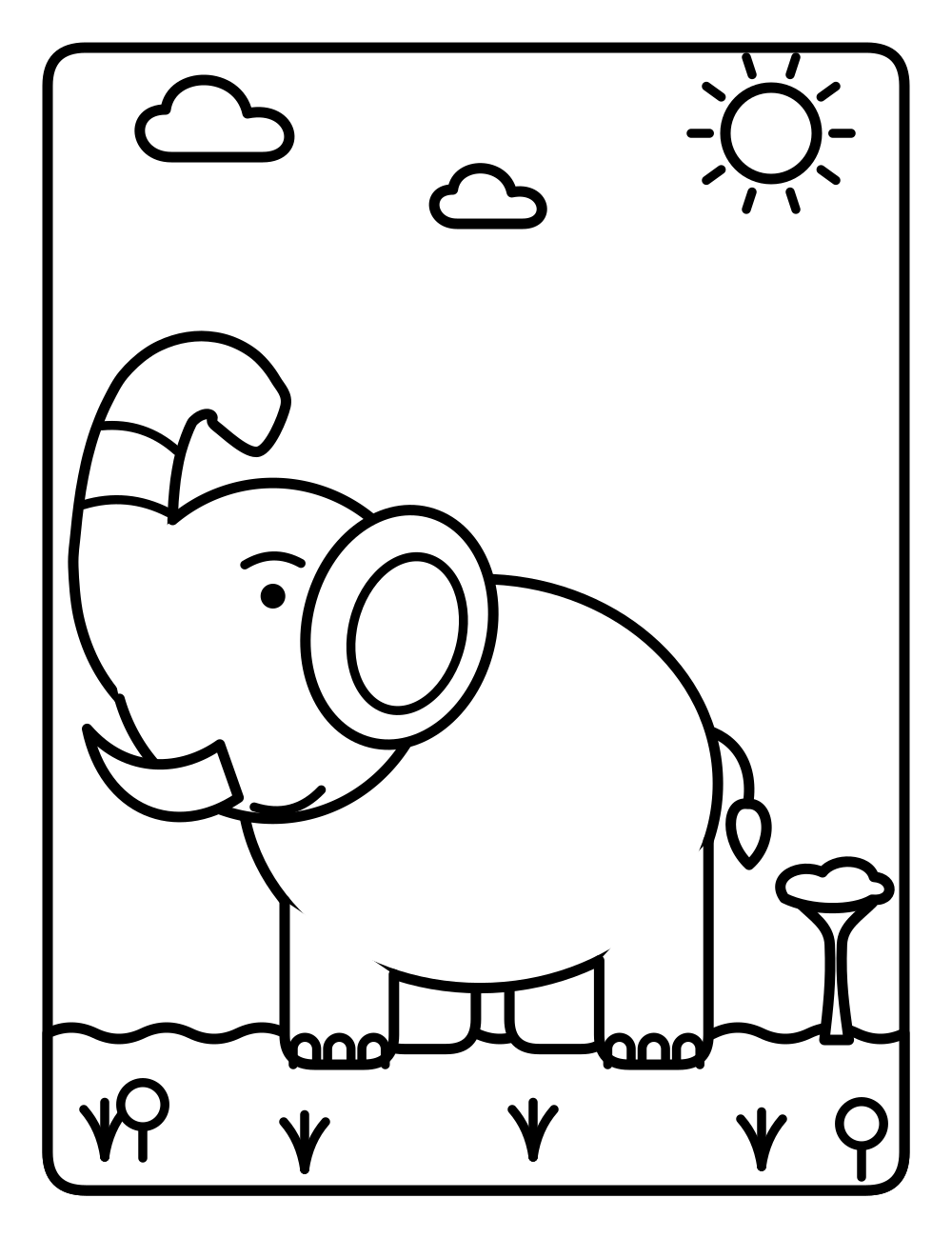
Elephant with a raised trunk and an ear with an inner circle, standing on grass under a sun and clouds, with a small acacia tree and flowers, drawn in thick lines.

Kids

Ages 6–8

Thick lines and a simple background to color.
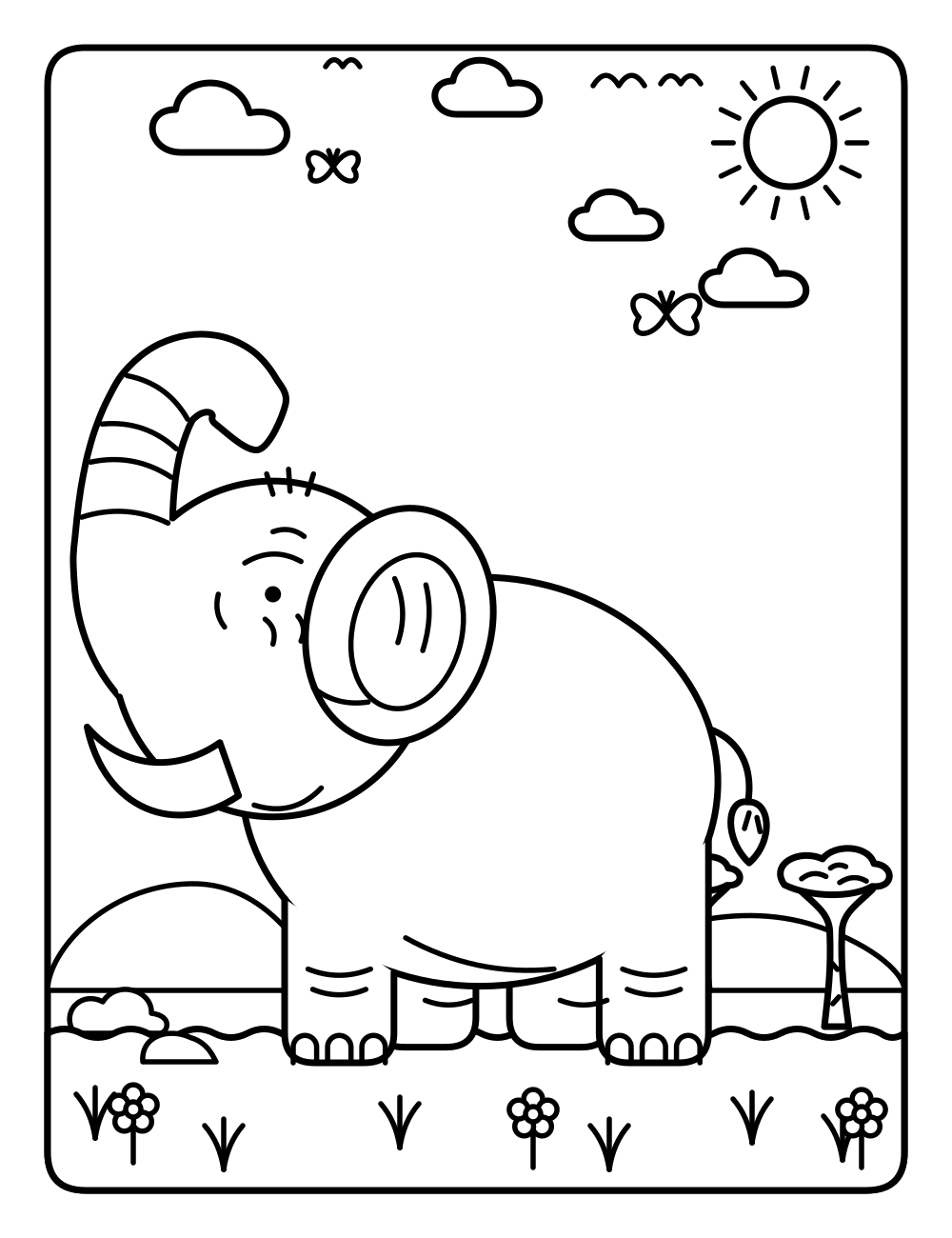
Detailed elephant with a wrinkled raised trunk, a veined ear, toenails and skin folds, standing in a savanna scene with hills, a small acacia, birds, butterflies and flowers.

Detailed

Ages 9–12

Finer lines, more areas and patterns for older children.

Color online

Choose a color, then tap an area of the picture to fill it. When you are happy, save it as an image or print it.

Coloring online needs JavaScript. You can still print the pages above.

Real colors to try

These are the natural colors of this animal. Use them, or pick your own.

  • Elephant gray
  • Light gray
  • Dark gray
  • Ivory
  • Ear pink
  • Grass green
  • Sky blue
  • Sun yellow

Elephant facts for kids

  • The elephant is the largest animal that lives on land.
  • An elephant's trunk has no bones. It can pick up a tiny peanut or lift a heavy log.
  • Elephants live in family groups led by the oldest female, called the matriarch.
  • An elephant's big ears help it keep cool: when it flaps them, the blood flowing through them gets cooler.
  • Baby elephants are called calves.

How to use this coloring page

  • Ages 3 to 5: start with the first picture. The body, the ear and the trunk are big areas that are easy to fill in with chunky crayons.
  • Ages 6 to 8: the second picture adds a scene. Try two different grays for the body and the ear, and leave the sun and flowers for last.
  • Ages 9 to 12: the third picture has wrinkles, toenails and a full savanna. One gray pencil and a darker one are enough to make the skin look folded.
  • Printing: choose A4 or Letter and print at 100% (actual size), not "fit to page", so the drawing keeps its margins.
  • At home or in class: pair it with the drawing lesson. Let everyone draw an elephant their own way first, then color the one on the page.

Pip's idea

Make a rainbow elephant: color the body, the ear and the trunk's stripes in different colors, then add dots or flowers on the ear.
Questions and answers

What is an elephant's trunk for?
An elephant uses its trunk to breathe, smell, drink, pick up food and greet other elephants. It has no bones in it. This picture shows the trunk raised, which elephants do to smell the air.
Why does this elephant have tusks?
Tusks are very long teeth. Many African elephants, both males and females, have them, and use them to dig for water, lift things and strip bark from trees.