African Buffalo Coloring Pages

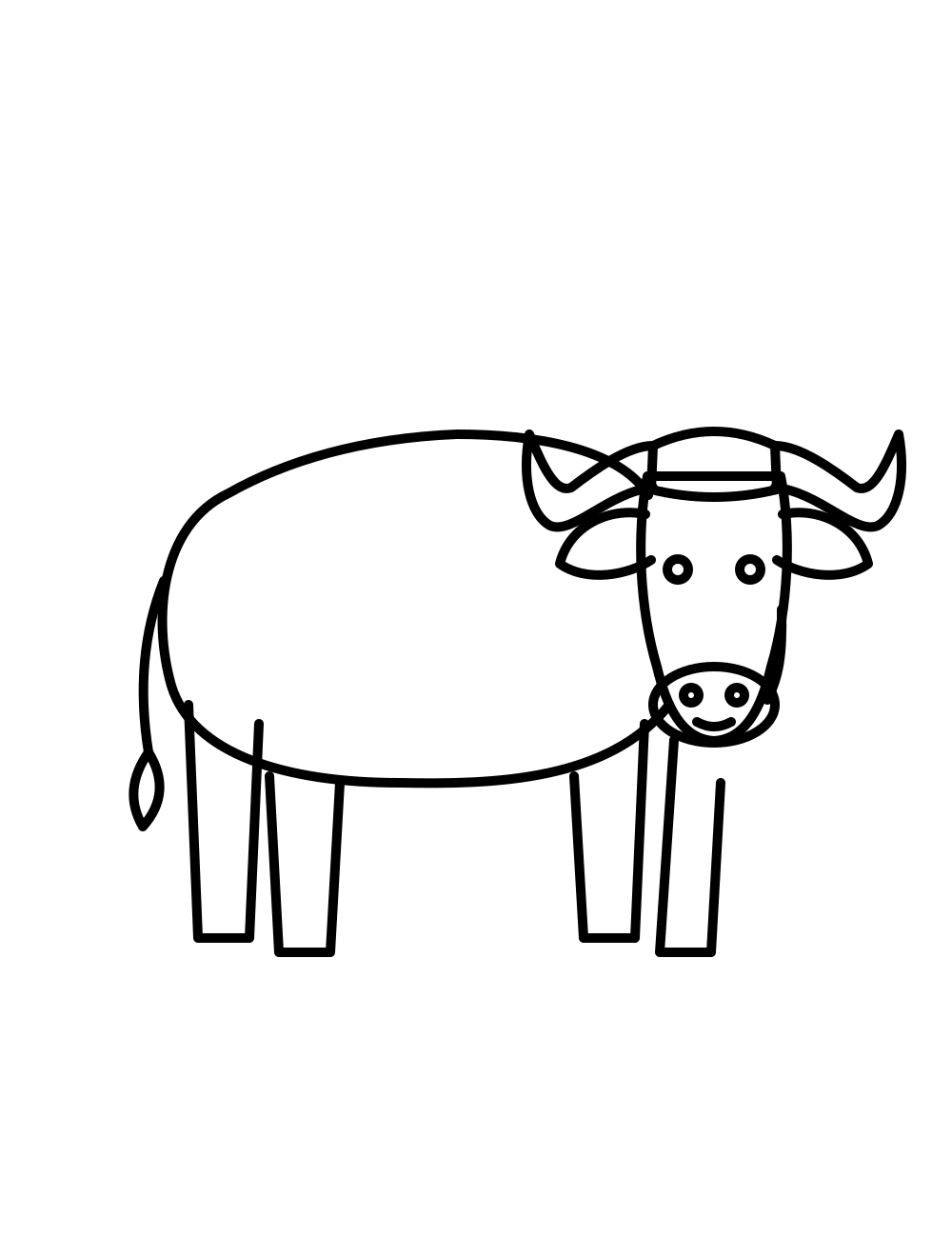
This friendly African buffalo looks right at you, with big drooping ears and a pair of wide horns that join in a thick band across its forehead. Its heavy body and strong legs give plenty of room for dark colors. The little page, for ages 3 to 5, keeps very thick outlines and no background. The kids page, for ages 6 to 8, puts the buffalo in the grass under a sun and clouds, and the detailed page, for ages 9 to 12, adds finer lines and a full savanna with a tree, birds and a butterfly.

Choose a level and printColor onlineHow to Draw an African Buffalo

Choose a level and print

The same drawing in three levels. Print it from the page or download a PDF.

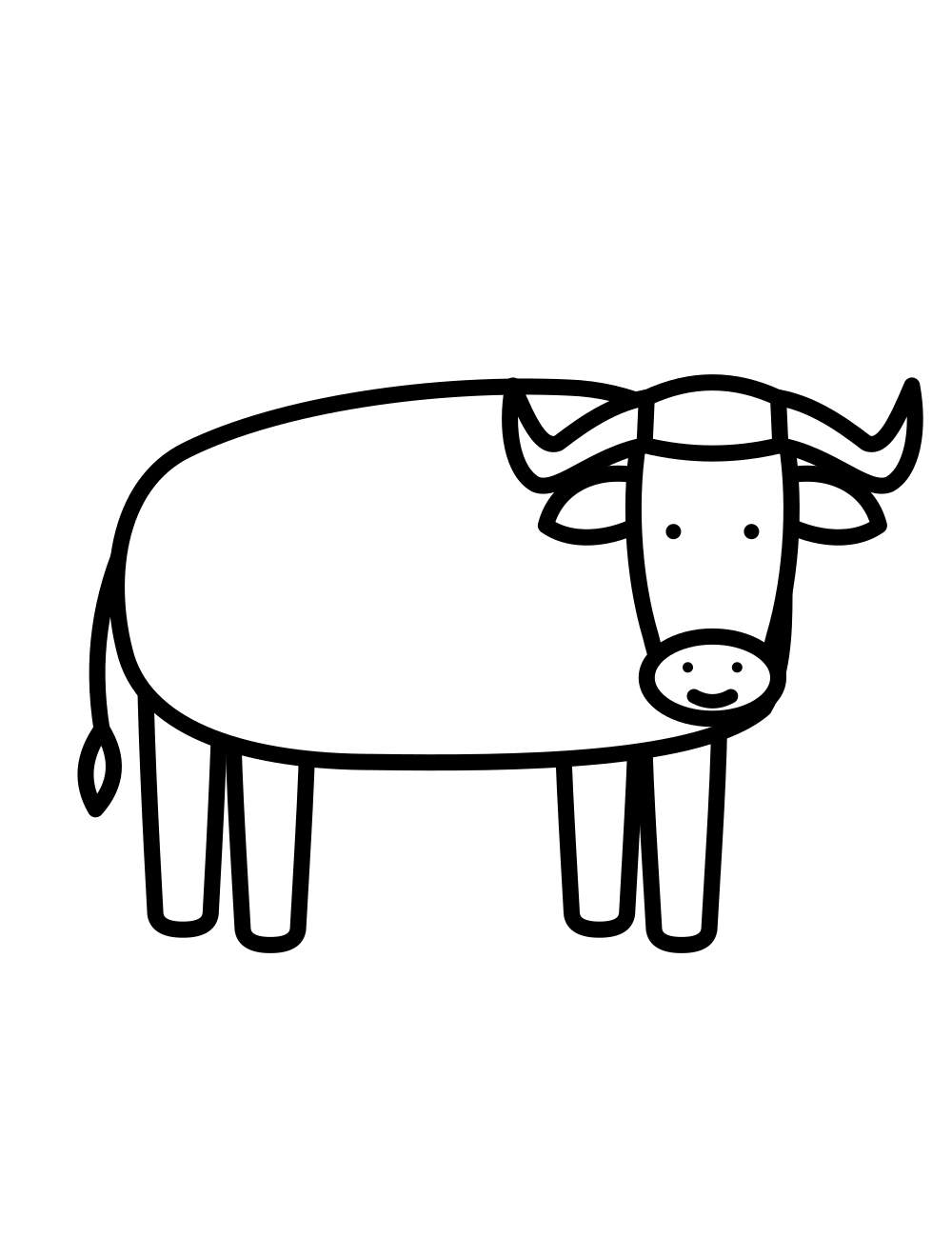
African buffalo facing the viewer with wide horns and drooping ears, with very thick outlines and no background, for ages 3 to 5

Little

Ages 3–5

Very thick lines and a few big areas. Easy for small hands.
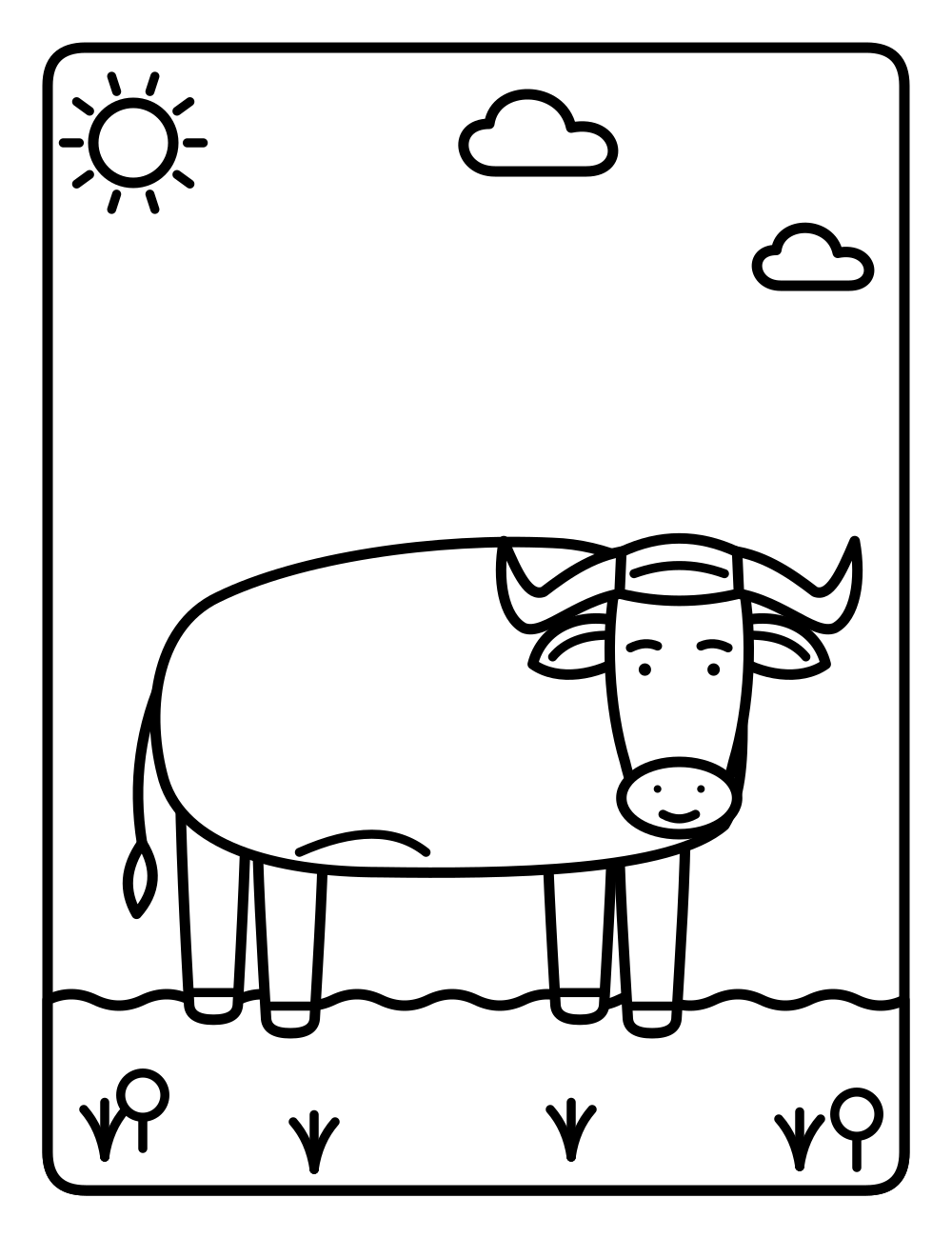
Friendly African buffalo with curved horns standing in the grass under a sun and clouds, with flowers, for ages 6 to 8

Kids

Ages 6–8

Thick lines and a simple background to color.
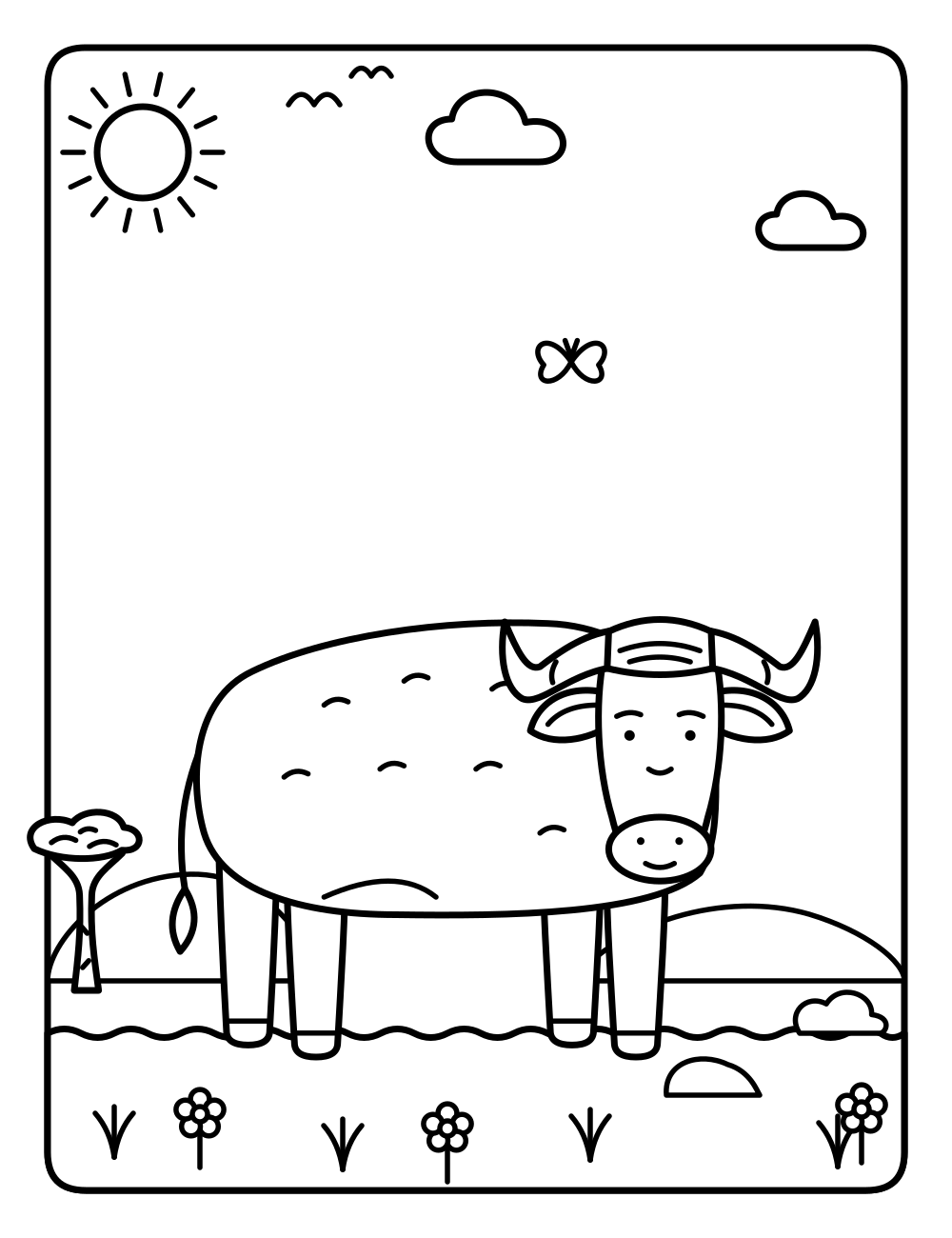
African buffalo in a savanna scene with an acacia tree, birds, a bush, a rock, flowers and a butterfly, for ages 9 to 12

Detailed

Ages 9–12

Finer lines, more areas and patterns for older children.

Color online

Choose a color, then tap an area of the picture to fill it. When you are happy, save it as an image or print it.

Coloring online needs JavaScript. You can still print the pages above.

Real colors to try

These are the natural colors of this animal. Use them, or pick your own.

  • charcoal black
  • dark brown
  • horn grey
  • pale muzzle
  • dusty tan
  • dry grass gold

African Buffalo facts for kids

  • African buffalo live in large herds in the grasslands and woods of Africa.
  • The horns of an adult male meet in a thick, hard band across the forehead called a boss.
  • Buffalo eat grass and like to stay close to water, where they drink every day.
  • Small birds called oxpeckers often ride on a buffalo's back and eat insects from its skin.
  • Buffalo love to roll in mud, which keeps them cool and protects their skin from bites.

How to use this coloring page

  • Little level: color the big body with a dark brown crayon first, then use grey for the horns.
  • Kids level: leave the nose and the inside of the ears lighter, so the face stays friendly and easy to see.
  • Detailed level: layer brown over black with soft pencil strokes to show the heavy shoulders and legs.
  • In class, talk about how buffalo live in herds, then let each child color a buffalo for a class herd on the wall.
  • Print at 100% on plain paper. Thicker paper helps if you use markers on the large dark areas.

Pip's idea

Make it a muddy buffalo: color the legs and belly in reddish browns as if it just walked out of a water hole, and add a tiny oxpecker on its back.
Questions and answers

What is the thick part on top of a buffalo's head?
It is called the boss. The two horns grow together into a hard, bumpy band across the forehead, then curve down and up on each side. Color it a little lighter than the face so it stands out.
What color is an African buffalo?
Most African buffalo are very dark brown or almost black, and young ones can be reddish brown. Grey works well for the horns and a pale tan for the nose.
Which buffalo page suits a young child?
The little level, for ages 3 to 5. It has very thick outlines, a few big shapes and no background, so the body and ears are easy to fill in.